
Doha, Qatar, 17th February 2026, ZEX PR WIRE– As the curtains fall on Web Summit Qatar 2026, a new narrative is emerging from the Middle East—one that replaces the image of “fragility” with one of “high-capacity innovation.” At the center of this shift is EmpactUS, a venture-building ecosystem that is rewriting the playbook for post-conflict recovery. Led by social impact entrepreneur Hammam Elmasri, the organization is championing a systemic approach to economic stabilization that prioritizes digital capacity over traditional humanitarian aid.
The core thesis presented by EmpactUS is simple yet provocative: In the modern era, the most durable form of reconstruction isn’t physical infrastructure—it is the creation of self-sustaining, tech-enabled entrepreneurship ecosystems.
The Failure of the “Aid-Only” Paradigm
For decades, the global response to conflict in the MENA region—from Palestine and Lebanon to Syria and Iraq—has been dominated by a “humanitarian-first” model. While essential for immediate survival, these short-term employment programs and aid cycles often leave communities in a state of “permanent fragility.”
“Recovery is not just about reconstruction; it is about restoring economic dignity,” says Hammam Elmasri, Co-Founder of EmpactUS. “We see young populations in these regions who are already digitally native, highly skilled, and profoundly entrepreneurial. They don’t lack talent; they lack the systems that translate that talent into global market value. If we don’t build those systems, we are simply managing poverty rather than solving it.”
The EmpactUS Framework: Three Pillars of Systemic Change
During his engagement with global tech leaders in Doha, Elmasri outlined the EmpactUS Model, a three-pillared strategy designed to act as “Stabilization Infrastructure” in volatile markets:
- Capacity First (Market-Aligned Skill Building)
Traditional education in conflict zones often lags behind global trends. EmpactUS focuses on high-intensity skill-building in the digital and service sectors—industries that are “geography-blind” and can operate even when local physical infrastructure is compromised. By aligning local talent with global market demands, they ensure that the workforce is resilient to local shocks.
- Ecosystem Integration (Breaking Geographical Isolation)
Conflict-affected founders often operate in silos, cut off from the capital and mentorship that their counterparts in Silicon Valley or Berlin take for granted. EmpactUS acts as a bridge, connecting MENA startups to global technology platforms, institutional investors, and corporate partners. “Global integration is not a luxury,” Elmasri explains. “It is a recovery multiplier that shortens learning curves and builds international credibility for founders who would otherwise be invisible.”
- Values-Driven Entrepreneurship (The Trust Currency)
In fragile environments, trust is the most valuable currency. EmpactUS mentors founders to prioritize governance integrity and long-term community impact over “blitz-scaling” or short-term speculative gains. This focus on sustainable growth creates businesses that act as anchors for local economic circulation and community resilience.
Startups as Engines of Peace
The broader implication of the EmpactUS model is that startups in conflict zones serve a dual purpose. Beyond generating revenue, they function as platforms for rebuilding social trust. They provide the “Digital Infrastructure” necessary for a society to transition from a state of crisis to a state of innovation.
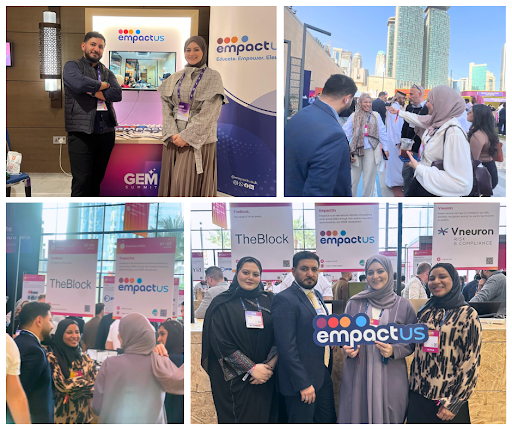
“We are seeing founders building fintech solutions under sanctions and edtech platforms amid school disruptions,” Elmasri noted at Web Summit. “These are not just businesses; they are evidence of a new recovery narrative. When we support them through coherent systems, we shift the focus from aid dependency to economic agency.”
A Call to Global Tech Leaders
As EmpactUS scales its operations across the MENA region, the message to the global tech community is clear: The next frontier of innovation may well be in the places we least expect. By investing in “Ecosystem Design,” global partners aren’t just performing corporate social responsibility—they are participating in the creation of a more stable, integrated, and prosperous global economy.
For Hammam Elmasri and the EmpactUS team, the mission remains unwavering. Post-conflict recovery is no longer about looking back at what was lost; it is about designing a future that is stronger, more inclusive, and driven by the limitless capacity of human ingenuity.
About EmpactUS
EmpactUS is a social impact organization dedicated to building value-driven startup ecosystems in conflict-affected and underserved regions. By bridging the gap between local talent and global innovation flows, EmpactUS empowers a new generation of entrepreneurs to lead the way in regional stabilization and economic growth.
Disclaimer: The views, suggestions, and opinions expressed here are the sole responsibility of the experts. No Just Examiner journalist was involved in the writing and production of this article.
